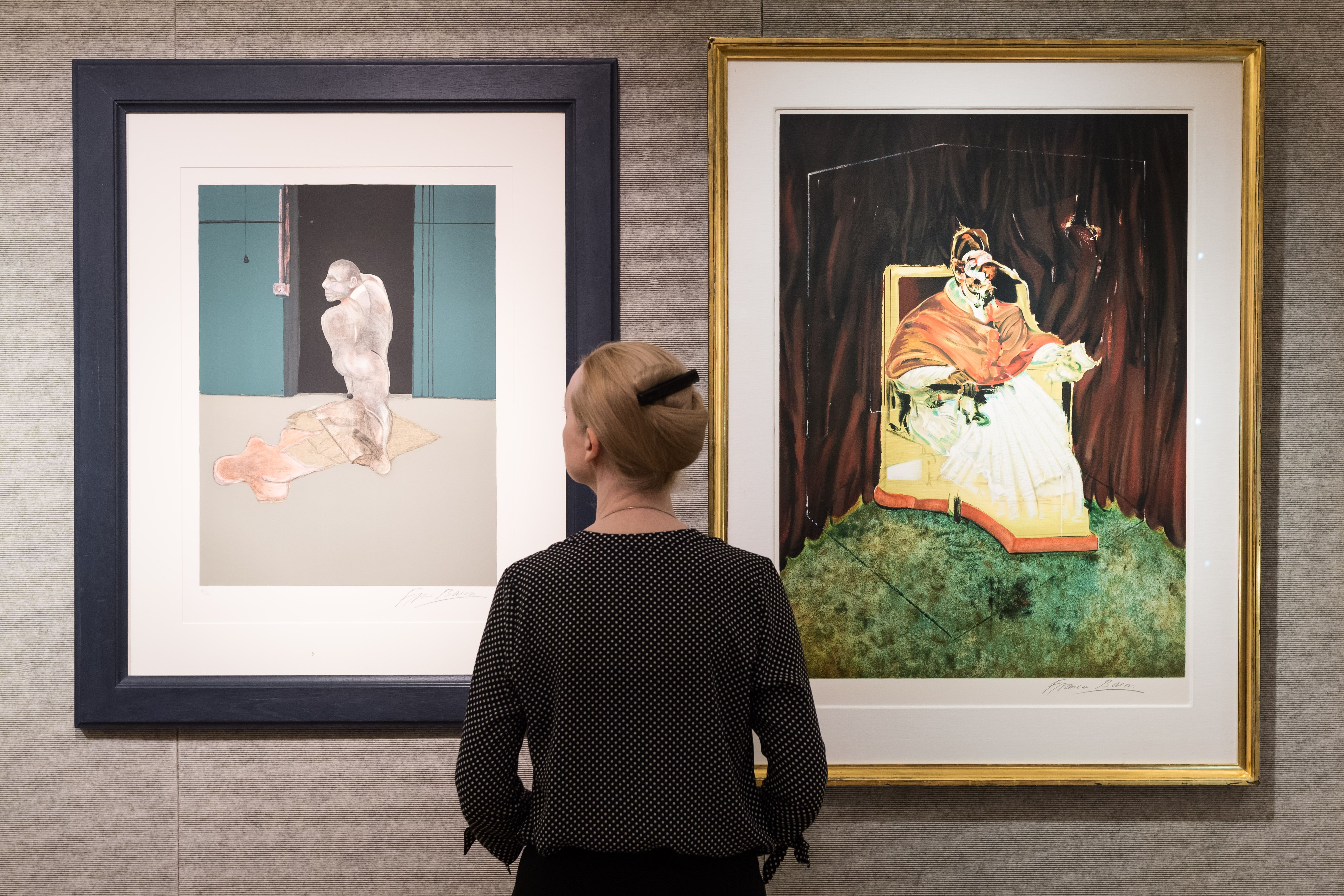

Income from auctions dropped about 6% in the first half of the year relative to the identical timeframe last year, leading to renewed worries regarding the robustness of the global art market. This happens alongside a more extensive downturn in fine-art transactions, indicating a change in collector habits and putting conventional business models to the test.
Although leading institutions such as Sotheby’s, Christie’s, and Phillips maintained their dominance, their total sum decreased to slightly below $4 billion in the first half of 2025. The central aspect of their operations, fine-art auctions, declined by around 10%. This indicates a market that is either stabilizing at a reduced level or potentially undergoing a prolonged structural evolution.
Despite the decline, some segments offered a measure of resilience. Sales of luxury collectibles such as high‑end jewelry, wristwatches, rare handbags and memorabilia held steady or even grew modestly. Among big houses, jewelry sales rose around 25%, while categories like sports collectibles saw even stronger demand. These segments are increasingly making up a larger portion of total revenue, softening the blow from weaker art sales.
One major pattern is the steep drop in blockbuster lots—artworks that once fetched over $10 million—where sales fell nearly 45%. Few marquee estates or mega‑collections entered the market this year. The absence of high‑value offerings contributes heavily to declining totals and underscores how dependent recent market growth had been on a small number of high‑value transactions.
During 2024, the worldwide art market volume saw a decrease of roughly 12%, continuing into the beginning of 2025. However, it is noteworthy that the overall number of sales experienced a minor increase: more affordable pieces under $5000, prints, and items priced below $50,000 stayed in demand. This change indicates an increased interest from mid-range purchasers and implies that the larger community of collectors is adjusting even as the engagement of the extremely wealthy wanes.
The decline in auction values and amounts is caused by several factors. Increased interest rates have made keeping art less appealing compared to other investment options; escalating geopolitical risks and trade disputes contribute to economic wariness. Numerous affluent individuals are shifting assets into stocks, real estate, or collectible sections that offer more favorable returns and liquidity.
Market analysts have also pointed out that ultra-modern art has seen a decline. Its value fell by almost 38% compared to the previous year, while artworks at the mid-range are seeing a slower decline in prices. Meanwhile, pieces by Old Masters and other well-established categories saw slight increases. Certain European and South Asian artworks even reached unprecedented prices—indicating a resurgent interest from collectors in these areas.
Information from auction houses during the initial half of 2025 indicates that although overall sales plateaued or fell, the average sell-through percentage remained constant at 87–88%, with the majority of items selling for more than the minimum estimates. This implies that there is strict pricing management and buyers are being careful and selective, opting not to withdraw completely.
Majors such as Christie’s generated around $2.1 billion in H1—nearly matching the same period last year. However, that number reflects a stabilization at a level far below what was seen in 2022, when mega-collectors dominated headline lots. That relative plateau may represent a “new normal” for the market unless major estates enter the pipeline.
Industry professionals are also responding to shifting dynamics. Many galleries and auction houses are doubling down on online and hybrid sales channels. About 40–50% of collectors report buying art online—particularly younger buyers who value emerging artists and digital access. Galleries are investing in livestreamed auctions, virtual exhibitions, and content that appeals to newer, more price-conscious audiences.
Smaller dealer segments—especially those with annual revenues under $250,000—have actually seen modest growth in sales. Collectors at the lower end of the price spectrum remain active, even as speculation and trophy buying recede. This diversification could stabilize the market in the long term by creating a broader, less concentrated base of demand.
Still, the contraction at the high end has sparked a reevaluation within the industry. Some galleries have scaled back mega‑events or postponed fairs that once defined the calendar. Others are exploring niche collaborations or smaller, curated events with a stronger emphasis on community engagement rather than prestige.
For collectors and investors, the current environment brings several considerations. Works priced between $100,000 and $1 million—which once received strong attention—are facing mixed demand. Taxes, tighter budgets, and increased offer scrutiny mean buyers are more selective and conservative, even for well‑established artists.
In parallel, the decline in sales of ultra-premium pieces undermines art’s potential as an investment category. Withdrawn from recently high-performing portfolios, art-secured loans and collateral agreements have seen a reduction in prominence, as financial experts highlight more favorable returns in conventional asset categories due to increasing interest rates.
Therefore, the decelerated market might present a chance. Experienced collectors who concentrate on lasting value are taking action, particularly regarding renowned artists and overlooked categories. When artworks are offered at reduced prices—at times 40% beneath former highs—astute investors perceive several opportunities to assemble curated collections with enduring allure.
As the art market transitions through a post‑boom period, its future could depend on flexibility. Sustained dependency on high‑value auctions seems impractical without new major offerings. Alternatively, the market is gravitating towards mid‑range collectors and digital advancements, as well as specialized areas like regional art, decorative objects, prints, and luxury collectibles.
In practical terms:
- Auction houses may widen private sales or fractional ownership offerings to offset declining public sale totals.
- Dealers are embracing transparency and online tools to engage younger collectors.
- Artists and galleries may prioritize collaborative exhibitions, alternative pricing models, or digital-first showcases.
The art world may be redefining its rhythm. Rather than annual highs driven by trophy lots, we may see a steadier pace: smaller sales, broader participation, and a mix of traditional and new models.
If costs stay low and availability remains constrained, optimism might return if essential properties become available for purchase. Until that happens, the ongoing downturn—though leveling off—acts as both a caution and a turning point. A 6% drop in auction income isn’t an indication of a full-blown crash, but it does highlight unpredictability, shifting investor actions, and increasing pressure to adjust.




.jpg "Comunidades de Playa Dorada 13")