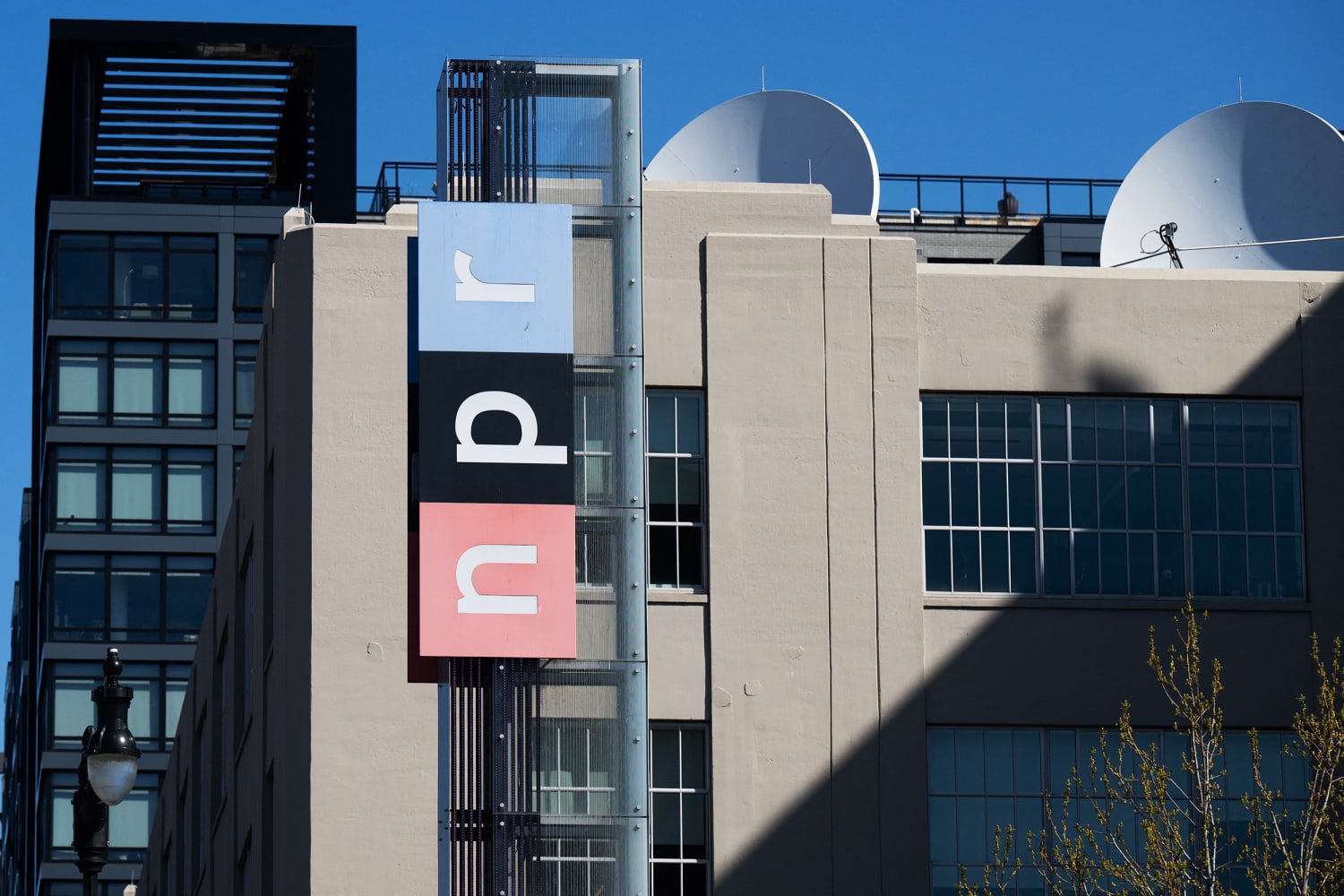

The choice to disband the Corporation for Public Broadcasting brings to an end a nearly sixty‑year era that helped define American public media, marking the conclusion of a congressional initiative originally created to bolster education, cultural enrichment and civic engagement, now closing amid political rifts and uncertainty over the direction of public broadcasting in the United States.
The Corporation for Public Broadcasting, widely known as CPB, has voted to formally dissolve, marking the conclusion of an institution that for decades served as a central pillar of the U.S. public media ecosystem. Established in 1967, CPB functioned as a conduit for federal funds to reach Public Broadcasting Service (PBS), National Public Radio (NPR), and hundreds of local public television and radio stations nationwide. Its closure follows a prolonged period of defunding and political pressure that accelerated during the second administration of President Donald Trump.
The board’s choice to completely close the organization, instead of letting it linger without funding, represents both a strategic and symbolic judgment. As stated by CPB leadership, dissolution was regarded as the ultimate measure to protect the principles on which public media was founded, rather than leaving the institution vulnerable in a diminished form, subject to ongoing political pressure and instability. With this decision, CPB shifts from a slow phase-out to a conclusive termination, prompting significant questions about how public media will be sustained and managed in the future.
The roots and mission of the Corporation for Public Broadcasting
The creation of CPB in the late 1960s grew from a bipartisan understanding that commercial media on its own could not adequately meet the nation’s educational, cultural, and civic needs. The Public Broadcasting Act of 1967 set up CPB as a private, nonprofit organization intended to shield public broadcasting from direct political influence while still permitting federal funding. This framework aimed to safeguard editorial independence and offer reliable financial support for programming that commercial broadcasters were unlikely to develop.
Over time, CPB evolved into a discreet yet vital presence underpinning many of the most familiar institutions in American media, opting not to create its own programming but instead to channel funding, strengthen infrastructure, and sustain a coast‑to‑coast network of stations serving both major cities and remote areas. Educational shows for children, long‑form journalism, classical music broadcasts, local narratives, and efforts to preserve cultural heritage all drew support from CPB as a financial and organizational foundation.
For numerous local stations, particularly those operating in smaller markets, CPB funding often accounted for a substantial share of their operating budgets. In addition to direct grants, the organization backed efforts like emergency alert systems, content preservation and technology modernization, underscoring the notion that public media fulfilled a public service role extending far beyond ratings or advertising income.
Political scrutiny and the path toward funding cuts
Despite its long-standing mission, CPB has faced criticism almost since its inception. Conservative lawmakers and commentators have periodically argued that public broadcasting, particularly its news and public affairs content, reflects a liberal bias. These critiques intensified over the past decade, fueled by broader debates about media trust, polarization and the role of government in funding information.
While earlier administrations and Congresses discussed possible cutbacks or reforms, the second Trump administration represented a decisive shift. With Republicans holding both Congress and the White House, long-running critiques evolved into tangible measures. Legislators took steps to withdraw federal financing from CPB, effectively severing the organization’s main revenue stream.
Supporters of defunding presented the decision as one of financial prudence and ideological fairness, insisting that taxpayers should not be compelled to finance media outlets they view as partisan. Opponents responded that public broadcasting consumes only a tiny share of the federal budget while offering substantial public benefits, especially in education, emergency communication and community-focused journalism.
Once Congress acted to defund CPB, the organization entered a period of managed decline. Programs were scaled back, long-term commitments unwound, and staff focused on closing out operations responsibly. The vote to dissolve the organization entirely was the culmination of this process, rather than an abrupt or unexpected development.
A conscious decision to let things fade
CPB leadership maintained that keeping the organization as an empty shell was never considered a sustainable long-term path, noting that without federal funding, CPB would be deprived of the authority and resources needed to carry out its mission and would remain exposed to continued political pressure, making dissolution, in their view, an act of responsible stewardship rather than a concession.
Patricia Harrison, CPB’s president and chief executive officer, described the decision as a way to protect the integrity of the public media system itself. By formally ending CPB’s existence, the board aimed to prevent the organization from being used as a political target or symbol in future debates, while allowing public media outlets to seek alternative paths forward.
The board’s chair, Ruby Calvert, acknowledged the severity of the impact that defunding has already had on public media organizations. At the same time, she expressed confidence that public media would endure, emphasizing its importance to education, culture and democratic life. Her remarks reflected a belief that while CPB as an institution may be ending, the values it supported continue to resonate with audiences and communities across the country.
Implications for PBS, NPR and local stations
The dissolution of CPB does not inherently signal the end of PBS, NPR or local public stations, yet it significantly reshapes the financial and organizational environment in which they function. These entities remain independent organizations supported by varied revenue sources, including listener contributions, corporate underwriting, foundation funding and, in some circumstances, assistance from state or local governments.
However, CPB funding has traditionally acted as a stabilizing force, especially for smaller stations without strong donor networks, and for these outlets the loss of federal backing could trigger scaled‑back programming, staffing reductions or, in severe situations, full shutdowns, while rural regions and underserved communities would likely bear the greatest impact since public media frequently functions as their main source of local reporting and critical emergency updates.
National organizations such as PBS and NPR may be better equipped to adjust, yet they still encounter significant hurdles. CPB funding sustained content distribution, joint reporting initiatives and shared services that strengthened the entire system. Filling that gap will demand fresh partnerships, expanded fundraising efforts and, potentially, tough strategic decisions regarding programming priorities.
The wider discussion surrounding public media and democratic governance
The conclusion of CPB has rekindled wider discussions about how public media functions within a democratic society, with supporters contending that public broadcasting delivers educational material for children, offers comprehensive reporting insulated from commercial influence, and showcases cultural programming that mirrors the nation’s diversity, while also highlighting its importance during emergencies, when public stations rapidly and reliably share essential information.
Critics, however, contend that the media landscape has shifted profoundly since 1967, noting that the rise of numerous digital platforms and streaming services calls into question the continued need for government-backed outlets, while others claim that public broadcasting has not upheld the political neutrality necessary to warrant taxpayer funding.
These competing perspectives reflect deeper tensions about trust in institutions, the fragmentation of audiences and the challenge of sustaining shared sources of information in a polarized environment. The dissolution of CPB does not resolve these debates but instead shifts them into a new phase, where public media must demonstrate its relevance without a centralized federal funding mechanism.
Safeguarding heritage and collective institutional memory
As part of its final responsibilities, CPB has taken steps to ensure that the history of public broadcasting is preserved. The organization has committed financial support to the American Archive of Public Broadcasting, an initiative dedicated to safeguarding decades of radio and television content that document the nation’s social, political and cultural evolution.
As part of this work, CPB is partnering with the University of Maryland to preserve its institutional records, allowing researchers, journalists, and the wider public to examine the organization’s influence on U.S. media policy. This initiative reflects an understanding that, although CPB is shutting down, its legacy continues to hold significant value within the nation’s historical narrative.
Future prospects without CPB
The absence of CPB creates a void that no single organization is likely to replace, and the direction of public media will hinge on a mix of community-driven efforts, philanthropic backing and active audience participation; while some stations might experiment with fresh digital strategies, university alliances or partnerships with nonprofit news groups, others may find it difficult to remain viable within an increasingly crowded media landscape.
There is also the possibility that future political shifts could reopen the conversation about federal support for public media in a different form. As Ruby Calvert suggested, a new Congress could revisit the issue, particularly if the consequences of defunding become more visible to the public. Whether that leads to the creation of a new institution or a reimagined funding model remains uncertain.
What is clear is that the dissolution of the Corporation for Public Broadcasting marks more than an administrative change. It represents a significant moment in the ongoing negotiation between media, politics and public life in the United States. For nearly 60 years, CPB embodied an attempt to balance independence with public responsibility. Its end forces a reconsideration of how that balance can be achieved in a vastly changed media landscape.
As public broadcasters adjust to this shifting landscape, their future may depend on the very principles CPB was originally created to safeguard: trust, service and a dedication to the public good. How well those ideals endure without the institution that once upheld them will help determine the direction of American media in the years ahead.




.jpg "Comunidades de Playa Dorada 13")